
Servers & Storage
Infrastructure built for the workload.
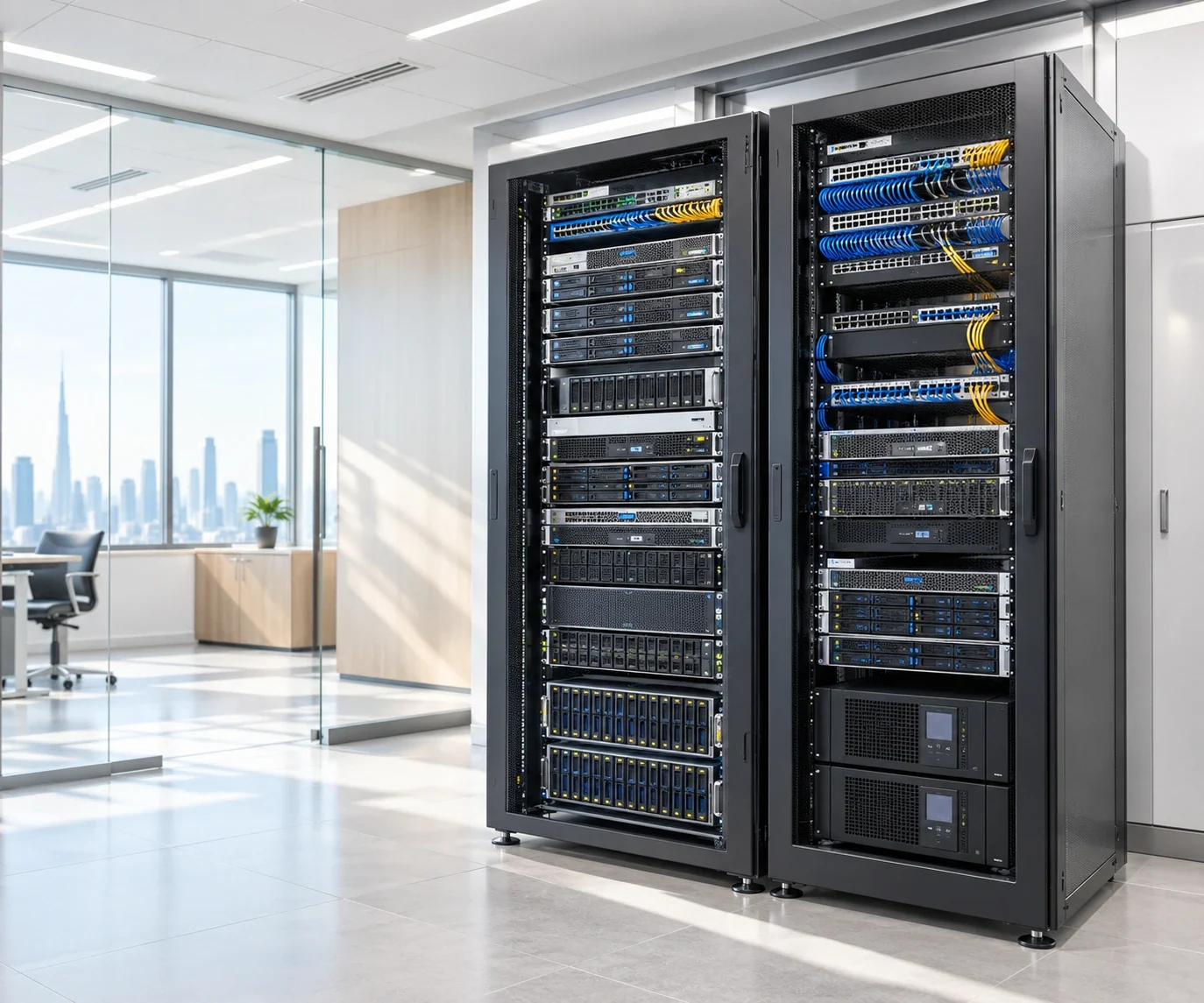
Server and storage solutions for business applications, virtualised environments, shared data and CCTV recording — designed around performance, capacity, resilience and future growth.
AMSS designs, deploys, migrates and supports server and storage infrastructure for businesses across Dubai and the UAE.
- Workload-led design
- Servers, NAS & SAN
- Virtualised infrastructure
- Business & CCTV workloads
The right platform starts with the workload.
Before hardware is specified, we establish what the infrastructure needs to run, how available it needs to be, how quickly the data will grow and how that data will be accessed or retained.
- 01
Workload & performance
Applications, databases, file services, virtual machines and video recording place very different demands on compute, memory and storage. The platform is sized around the actual workload rather than a standard hardware bundle.
- 02
Availability & resilience
The acceptable impact of hardware failure or planned maintenance influences redundancy, storage architecture and how critical services should be protected.
- 03
Capacity & growth
Current utilisation is only the starting point. Storage and compute capacity should account for expected data growth, additional users, new applications and the intended life of the platform.
- 04
Access, retention & write pattern
Shared files, databases and continuous CCTV recording behave differently. Performance, retention and storage media are selected around how the data is created, accessed and retained.
What our server & storage solutions cover.
AMSS designs server and storage infrastructure around the applications, users, data and operational requirements it needs to support — from a new deployment to an upgrade or migration of an existing environment.
- 01
Server design & deployment
Physical server platforms designed and configured around application requirements, user demand, performance targets and expected growth.
- 02
Virtualised infrastructure
Server infrastructure for virtualised workloads, helping organisations consolidate applications and use compute resources efficiently while maintaining clear capacity and resilience planning.
- 03
Centralised storage
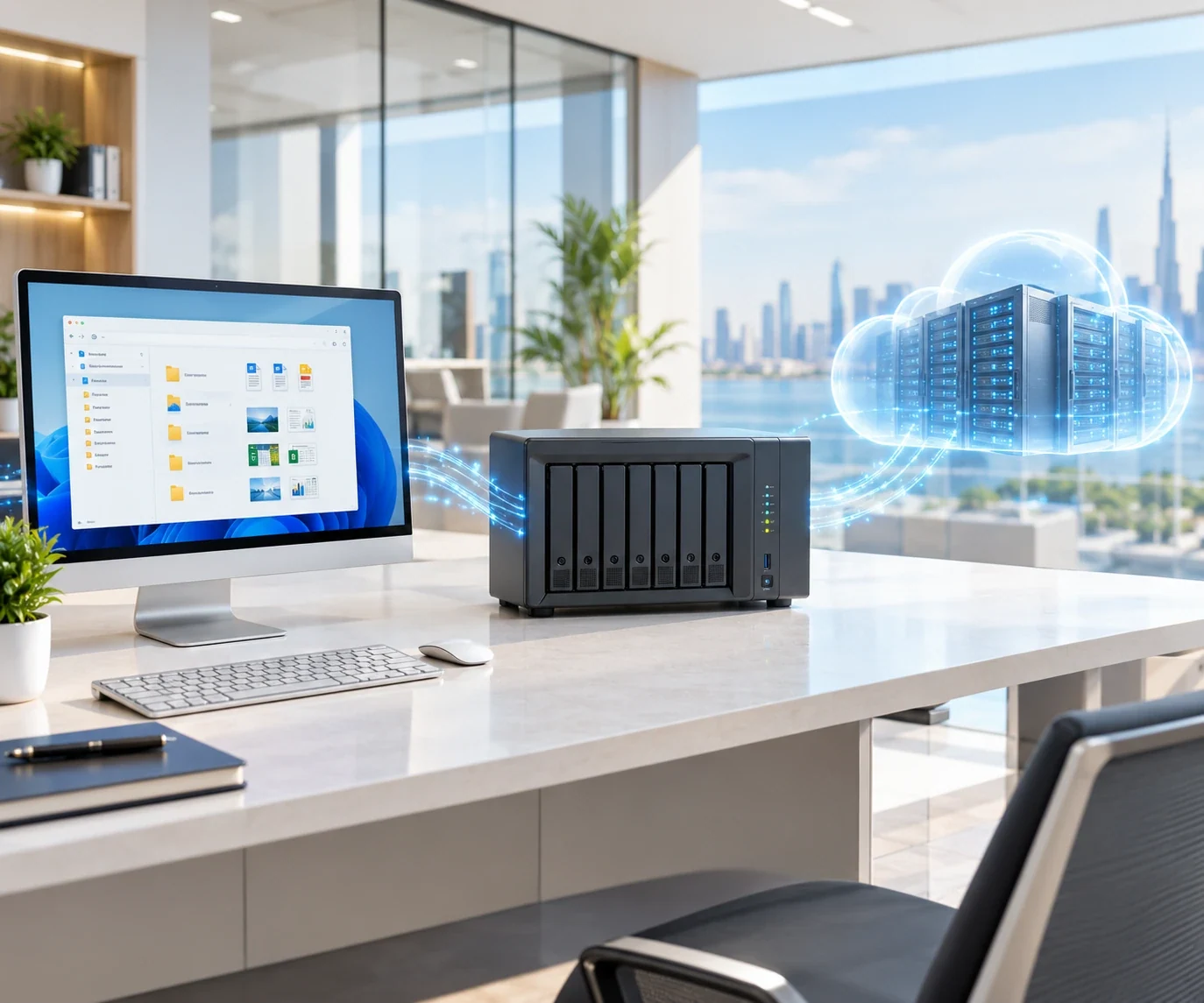
NAS and SAN storage for shared files, application data, archives and other centralised workloads, sized around capacity, performance, availability and future expansion.
- 04
CCTV recording & video storage
Recording servers and storage infrastructure designed around camera count, resolution, recording profile and retention requirements for continuous CCTV & video surveillance workloads.
- 05
Storage resilience & capacity planning
Storage architecture planned around usable capacity, redundancy requirements, workload behaviour and the operational impact of a component failure.
- 06
Server & data migration
Server replacement, storage migration and cutover planning designed to move applications, files and workloads into the new environment while controlling disruption to users and business operations.
- 07
SharePoint & cloud data migration
Planning and migration of business files and document libraries from existing servers, shared drives or local storage into supported SharePoint and cloud environments, including migration preparation, data transfer, permissions review, validation and cutover planning.
- 08
Backup & data protection integration
Server and storage infrastructure designed to work with the organisation's backup and recovery strategy, with data-protection requirements considered as part of the wider architecture.
- 09
Monitoring & lifecycle support
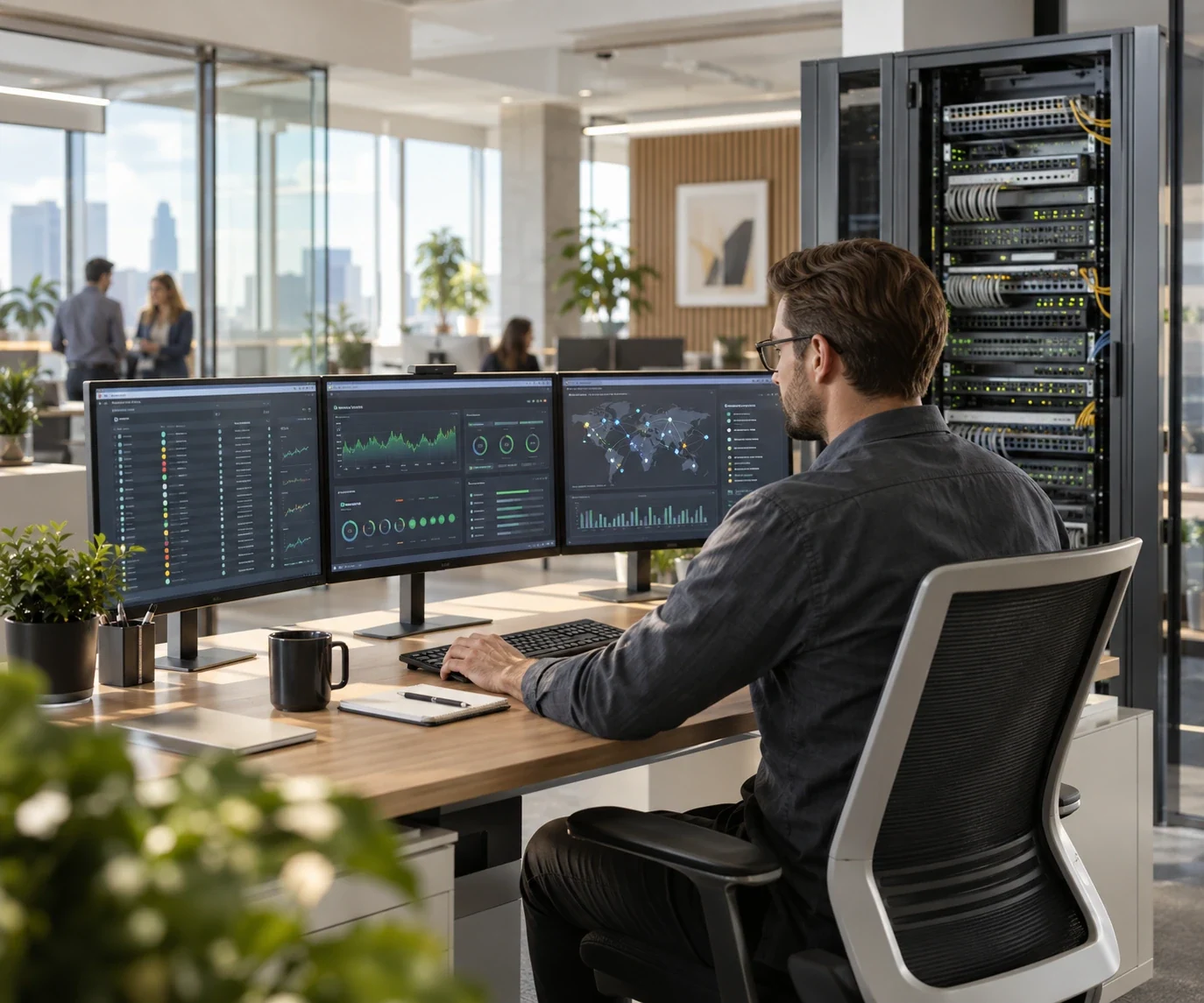
Ongoing system health checks, firmware and capacity reviews, technical support and lifecycle planning to help keep infrastructure maintained after deployment.
Not every workload has to stay where it started.
A server refresh is also an opportunity to review where applications and data should live. Some workloads remain best suited to local infrastructure; others may be appropriate for virtualised, SharePoint or supported cloud environments.
AMSS can assess the existing environment, plan the destination architecture and manage the migration process around business requirements rather than treating infrastructure replacement and data migration as separate decisions.
Business data and surveillance video are not the same workload.
Business applications, shared files and virtual machines typically depend on responsive access and changing utilisation. CCTV recording creates a continuous stream of data with its own throughput, retention and capacity requirements.
AMSS works across servers, storage, networking and video surveillance, allowing the infrastructure to be designed with both environments in mind rather than treating storage as an isolated hardware purchase.
Where systems share racks, switching or supporting infrastructure, responsibilities and capacity can be considered as part of one engineering environment.
How a server & storage project starts.
Each stage is agreed before the next one begins, so the platform is specified against the environment it has to run rather than against a price list.
- 01Assess
Review the existing infrastructure, workloads, storage utilisation, applications, known constraints and expected growth.
- 02Design
Define compute, storage, resilience and connectivity requirements before selecting the appropriate architecture.
- 03Deploy & migrate
Install and configure the environment, migrate the agreed workloads or data, and commission the platform around an agreed implementation and cutover plan.
- 04Support
Document the deployed platform and establish the appropriate maintenance, monitoring and lifecycle support arrangements.
Designed around what the business actually needs to run.
The specification is shaped by the environment around the server as much as by the server itself.
- 01
Applications & users
The applications being hosted, number of users and workload profile determine the compute and memory requirements.
- 02
Data & retention
Existing data volume, growth rate and retention requirements determine how much usable storage the platform needs over its intended life.
- 03
Network & connectivity
Servers and storage depend on the network around them. Switching, bandwidth and structured cabling are considered alongside the platform itself.
- 04
Continuity & recovery
The operational impact of downtime and data loss helps determine resilience, backup integration and recovery requirements.
Server & storage infrastructure for business-critical workloads.
The architecture changes with the workload, but the objective remains the same: reliable access to the applications and data the organisation depends on.
- 01Business applications
- 02Virtualised environments
- 03Shared files & business data
- 04CCTV recording & retention
- 05Business centres & offices
- 06Growing IT environments
What businesses ask about servers & storage.
The questions that come up most often when a server refresh, a storage expansion or a migration is being planned.
01Can our existing servers be upgraded instead of replaced?
Possibly. Memory, storage and other components can sometimes extend the useful life of an existing platform. AMSS first reviews the hardware, workload, support status, capacity and business requirements to determine whether an upgrade is technically and commercially sensible.
02What is the difference between NAS and SAN storage?
NAS provides shared file-based storage over the network and is commonly used for file sharing, archives and certain backup workloads. SAN provides block-level storage and is typically used where applications or virtualised environments require more specialised storage performance and availability. The appropriate choice depends on the workload.
03Can the same infrastructure store business data and CCTV recordings?
It can in some environments, but the workloads should be assessed separately. CCTV creates continuous recording traffic and retention requirements that differ from normal business data. Dedicated storage or logical separation may therefore be appropriate depending on performance, resilience and capacity requirements.
04Do you provide server solutions for CCTV recording?
Yes. AMSS can design recording-server and storage infrastructure around camera count, resolution, recording settings and required retention, with the wider network and surveillance environment considered as part of the design.
05Can AMSS support virtualised server environments?
Yes. Server and storage infrastructure can be designed for virtualised workloads, with compute, memory, storage capacity and resilience planned around the applications being hosted.
06Do you handle server and data migration?
Yes. Migration planning can include review of the existing environment, configuration of the destination platform, data or workload migration, cutover planning and post-migration validation.
07Can AMSS migrate files and business data to SharePoint?
Yes. AMSS can plan and migrate business files and document libraries from supported servers, file shares or local storage into appropriate SharePoint or cloud environments. The scope is defined around the existing data structure, permissions, destination platform and required cutover process.
08Can ongoing server support be included after installation?
Yes. Ongoing support can include system health checks, maintenance, capacity reviews and technical support, either as part of the infrastructure scope or alongside an appropriate Managed IT support arrangement.
Planning a server refresh, storage expansion or data migration?
Tell us what you run today, what needs to improve and where capacity, performance, reliability or data location is becoming a constraint. AMSS can review the environment and recommend a practical server, storage or migration approach for your requirements.